This chapter covers adding, moving and deleting pages, and the page settings: a page's title, address, menu button and when it's published.
Adding a page
Go to a page in the part of the website where the new page should go. To add a page under Services, for example, go to the Services page.
Click Add Page in the main toolbar, and choose where it goes.
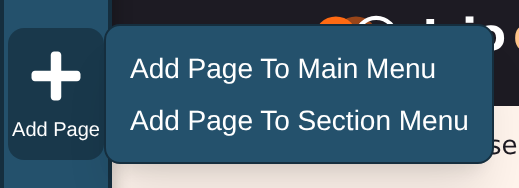
Add Page To Main Menu adds a page to the top level of the website.
Add Page To Section Menu adds it inside the section you're in.
Add Page To Subsection Menu, if you see it, adds it one level further in.
Your website may have more options here, such as adding a news article.
The new page is called "New Page", and it isn't published yet, so visitors can't see it. Go to it from the menu.
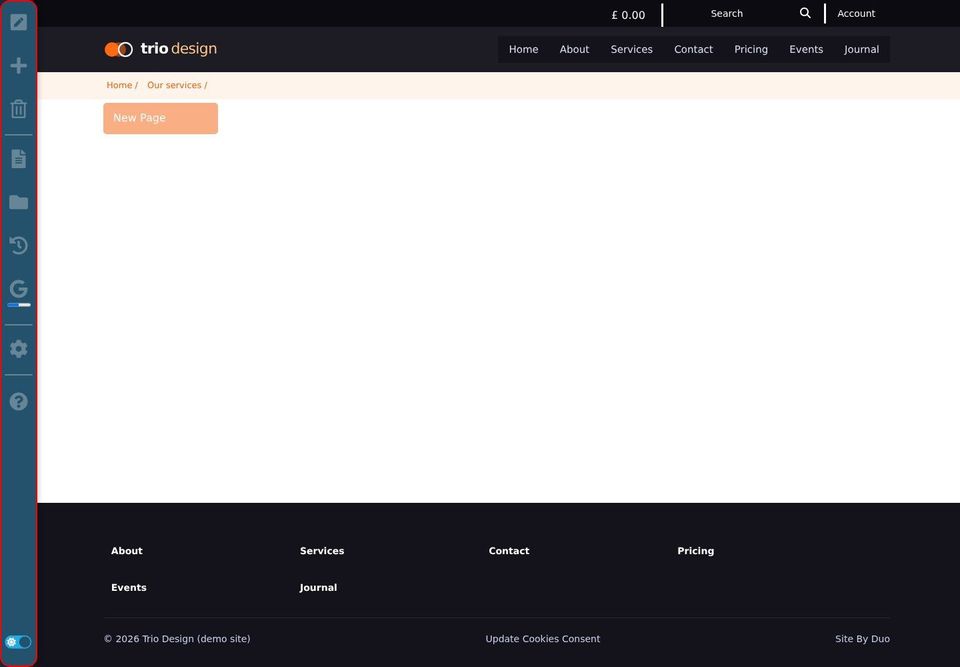
Naming the new page
The quickest way is to give the page its main heading:
Open the page for editing, and type the page's name as the Heading 1 at the top, such as "Garden design".
Add the rest of the content and click Save.
When you save, the page takes its title from that heading, and its address too. A page under Services with the heading "Garden design" becomes /services/garden-design/.
You can also name it in the page settings. Click Pages in the main toolbar, type a Page Title and click Save. The address changes to match the title, so you don't need to type a Path. See The Details tab.
The address only follows the heading or title the first time, while it still ends in new-page. After that, changing the heading or title leaves the address alone, so links to the page keep working. You can still change it yourself in Path.
When the page is ready, tick Publish this page in Pages and save again.
The page settings window
Click Pages in the main toolbar. The page settings window shows a list of pages on the left and the settings for the selected page on the right. It opens at the page you're on.
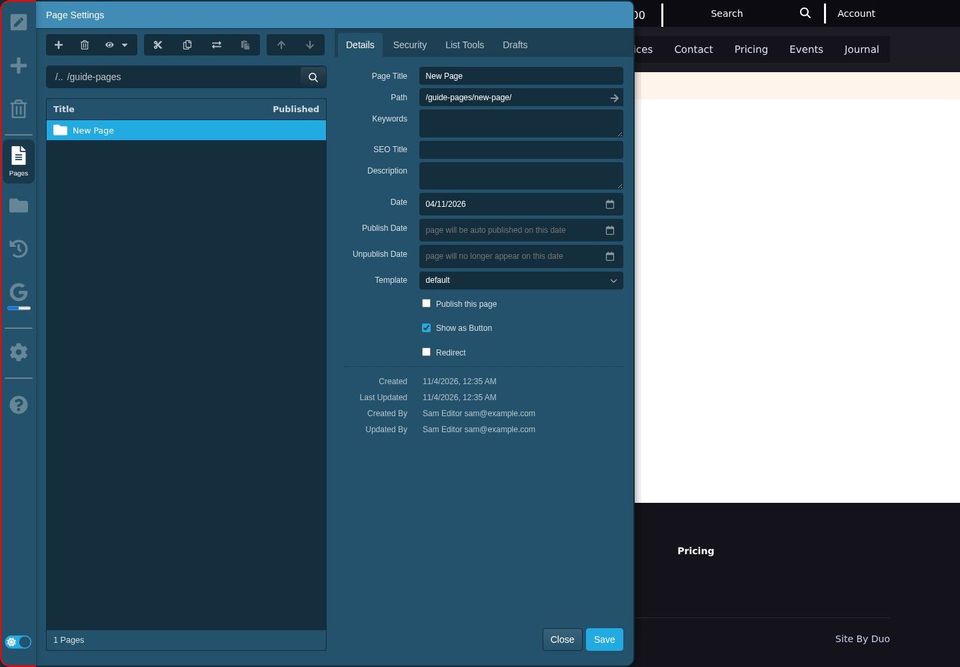
Double-click a page in the list to see the pages inside it. Click a part of the address above the list to go back up a level. Click a page once to see its settings.
The page list buttons

Add page inside the folder you're looking at.
Delete the selected page.
View options choose which pages the list shows. See below.
Cut,
Copy,
Alias and
Paste move and copy pages. See Moving and copying pages.
Move up and
Move down change the page's place in the list, which is also its place in the menu.
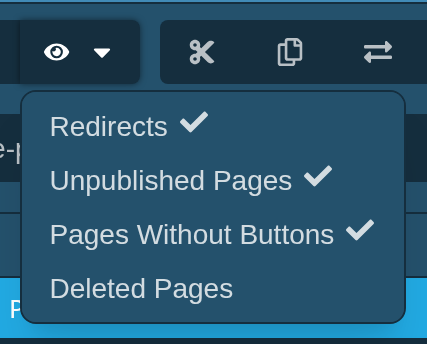
The view options menu shows or hides redirects, unpublished pages and pages without a menu button. Deleted Pages shows pages that have been deleted, so you can bring one back with the restore button.
The Details tab
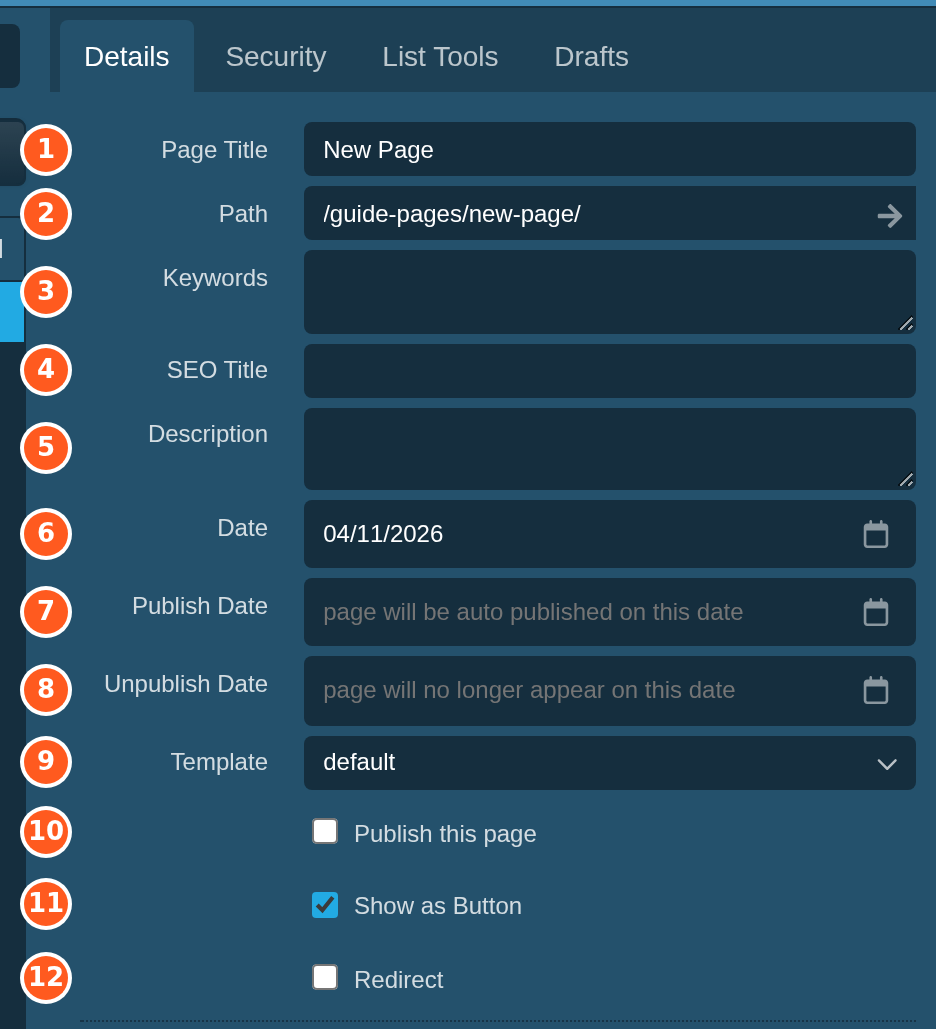
Page Title: the page's name in menus and in the browser tab.
Path: the page's address. Keep it short, in lower case, with hyphens between words, such as
/services/garden-design/.Keywords: other words people might search for. See Search engines.
SEO Title: a different title for search results, if you want one.
Description: a sentence or two that search engines show under the title.
Date: used for news and blog pages.
Publish Date: the page goes live by itself on this date.
Unpublish Date: the page is taken down by itself on this date.
Template: the page's layout. Only change this if your web designer suggests it.
Publish this page: visitors can see it.
Show as Button: the page appears in the menu.
Redirect: send visitors to another address instead of showing the page.
Click Save at the bottom of the window to keep your changes, or Close to leave without saving.
When you change a page's path, links to it from your other pages are updated for you. Links from other websites and from emails aren't, so try not to change the path of a page that's been live for a while.
Scheduled publishing and unpublishing are checked every hour, so a page may go live up to an hour after its Publish Date.
The other tabs are covered in other chapters: Security in Members and permissions, and Drafts in History and drafts. List Tools is for web designers.
Moving and copying pages
To move a page, select it in the page list and click Cut. Open the folder you want to move it to, then click Paste. The pages inside it move too.
To copy a page, do the same with Copy.
Alias makes a page that shows the same content as the original in a second place. Changes to either one show in both.
Deleting a page
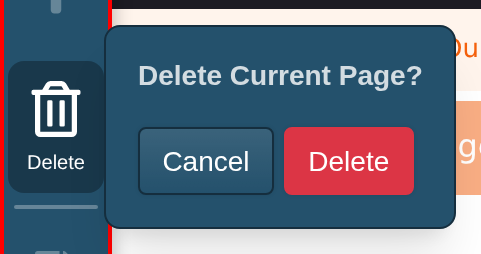
Go to the page, click Delete in the main toolbar, then click Delete again to confirm. You can also delete the selected page from the page settings window.
If you delete a page by mistake, open the page settings window, choose Deleted Pages in the view options, select the page and click restore.